
E-learning course · Reservoir Engineering
Well Testing for Injectors Wells
- English
- 3 h
- Giovanni Da Prat
Course content
General Objective: The interpretation methods commonly used to analyze pressure data acquired in injector wells are presented. For the sake of completeness, a brief introduction to well test analysis
methodology including machine learning models is also given for a proper understanding of its application in the case of injector rather than producer wells. Falloff test interpretation
methods for either water or polymer injector wells is included. Course is given in seven videos. It follows Video’s content:
- Module 1: Introduction / Well testing overview / Testing Exploratory wells / Types of Well Tests / Well Testing Program
- Module 2: Basic Interpretation Process / Unconventional Reservoirs / Machine Learning
- Module 3: Pressure Transient Analysis-Example
- Module 4: Injectivity and Falloff testing / Geological and reservoir environment / Pressure data acquisition
Module 5: Basic mathematical model development / Radial composite and multibank models’ solutions - Module 6: EOR Applications / Analytical modelling flow of non-Newtonian (polymer) and Newtonian fluids / Hall Plot
- Module 7: Numerical nonlinear solution / Analysis examples / Reserves development by primary and secondary recovery – a simulation example / Course Summary
Audience: The course are aimed at production and reservoir engineers with or without experience in the training topics.
Dedication: 3 hours.
About the instructor
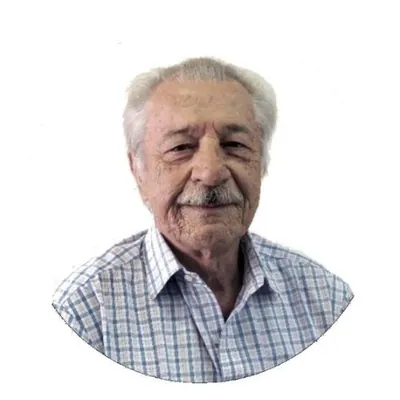
Giovanni Da Prat. PhD in Petroleum Engineering from Stanford University. Specialist in pressure test interpretation methods, production decline, and reservoir engineering, applicable to both conventional and unconventional reservoirs.
Advisor on pressure test design and interpretation. He has over 35 years of experience and has been an independent consultant for several international oil and gas operating companies for more than 15 years. He is the author and/or co-author of over 100 technical articles, most of them published in the SPE.